
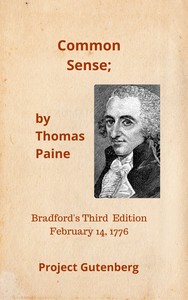
Common Sense by Thomas Paine
Let's set the scene. It's early 1776 in the American colonies. The battles of Lexington and Concord have happened, but full-scale revolution? That's still a radical, scary idea to most. People are loyal to Britain. They want their rights as Englishmen respected. Enter Thomas Paine, a recent immigrant from England, with a cheaply printed pamphlet called Common Sense.
The Story
This isn't a story with characters and a plot twist. It's an argument. Paine structures it like a lawyer making a case before a jury—the jury being every colonist. First, he attacks the very foundation of British rule: monarchy and hereditary succession. He calls kingship silly and dangerous, a system that puts fools in charge just because of their bloodline. Then, he shifts to America's situation. He says waiting for reconciliation with Britain is a fantasy. He breaks down the practical reasons—trade, defense, distance—why staying tied to a distant island makes no sense. His final, powerful point is about destiny. He paints a vision of America as a beacon of freedom for the world, if only it has the courage to break free. The 'story' is the journey of an idea, from radical fringe to common belief.
Why You Should Read It
You should read it because it's a masterclass in persuasive writing. Paine doesn't use fancy language meant for scholars. He writes for the tavern-goer, the farmer, the shopkeeper. His sentences are short, his logic is clear, and his passion bleeds through every page. Reading it, you understand how powerful the right words at the right time can be. It’s also a fascinating look at how political identity forms. He stops calling his readers 'colonists' and starts calling them 'Americans.' He’s building a new nation in people's minds before it exists on a map. The themes—self-governance, challenging inherited power, the right to start fresh—feel incredibly current.
Final Verdict
This is a must-read for anyone curious about how ideas change history. It's perfect for readers who love political rhetoric, fans of foundational American history, or anyone who enjoys a brilliantly crafted argument. It’s short, powerful, and surprisingly easy to follow. You won't get a narrative, but you will get a front-row seat to the moment a revolution found its voice.
The copyright for this book has expired, making it public property. Enjoy reading and sharing without restrictions.



Joseph Jones
4 months agoCompatible with my e-reader, thanks.