
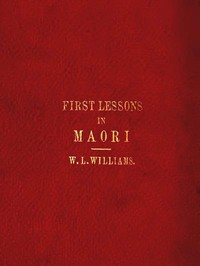
First Lessons in the Maori Language, with a Short Vocabulary by W. L. Williams
Let's be clear from the start: this isn't a novel. First Lessons in the Maori Language is exactly what its title promises—a beginner's guide. Published in the 1860s, it walks you through the basics: the alphabet (with those crucial macrons for long vowels), sentence structure, common phrases, and a vocabulary list. Bishop William Leonard Williams compiled it, drawing on his lifelong experience living in New Zealand and his work with Māori communities. The book is methodical, starting with simple nouns and building up to more complex grammar, aiming to give missionaries, settlers, and officials a functional grasp of the language.
Why You Should Read It
This is where it gets interesting. Reading this today isn't really about learning te reo Māori (we have much better, modern resources for that!). It's about holding history in your hands. Williams wasn't a distant scholar; he was there. His explanations reflect an intimate, day-to-day understanding of the language as it was spoken in the 19th century. You get a sense of his intent to bridge a gap, however imperfectly. But you also read it with a 21st-century mind, aware of the wider context of colonization and the immense pressure on Māori language and culture at that time. The book becomes a document of that relationship—one of respect and effort, yet undeniably part of a larger, often damaging, system. It makes you think about who writes the first textbooks, and why.
Final Verdict
This book is a niche gem, but a powerful one. It's perfect for history buffs, language nerds, and anyone with a deep interest in New Zealand's colonial past. If you're looking for a dynamic narrative, you won't find it here. But if you're the type who loves primary sources—who enjoys reading between the lines of an old manual to sense the world that produced it—then this is a compelling short read. It's less of a 'how-to' guide now and more of a 'how-it-was' snapshot. Approach it as a historical artifact, not a language course, and you'll discover a quiet, thought-provoking piece of the puzzle that is Aotearoa's story.
This text is dedicated to the public domain. Access is open to everyone around the world.
Jackson Robinson
2 days agoHonestly, the pacing is just right, keeping you engaged. I will read more from this author.
Paul Robinson
1 year agoI stumbled upon this title and the flow of the text seems very fluid. Don't hesitate to start reading.
Steven Lewis
9 months agoHonestly, it creates a vivid world that you simply do not want to leave. One of the best books I've read this year.
Thomas Moore
1 year agoA must-have for anyone studying this subject.

Steven Taylor
1 year agoRecommended.