
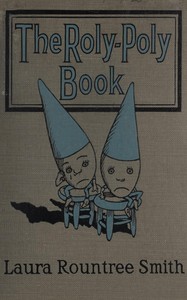
The Roly-Poly book by Laura Rountree Smith
Let's set the scene: it's 1913. The world is on the brink of massive change, but Laura Rountree Smith sits down and writes a book celebrating... roundness. The Roly-Poly Book is exactly what it promises—a series of short, poetic vignettes and tales where the main characters are all things circular.
The Story
There isn't one continuous plot. Instead, Smith creates a series of little worlds. One chapter might personify a cheerful, bouncing ball proud of its perfect shape. Another follows the journey of a copper penny, passed from hand to hand, witnessing snippets of life. She writes about the humble potato rolling into the fire, the dignity of a globe, and the comedy of a runaway wheel of cheese. The 'roly-poly' bug itself gets its moment, portrayed not as a pest, but as a charming little creature content with its simple, tumbling life. Each piece is a small observation, a playful 'what if' that turns everyday objects into characters with feelings and mini-adventures.
Why You Should Read It
In our fast, digital, and often cynical world, this book is a refreshing pause. Smith's writing isn't complex, but it's profoundly kind and observant. She finds magic in the mundane. Reading it feels like rediscovering a bit of childhood curiosity—that time when a button was a treasure and a spinning top was a fascinating mystery. The tone is consistently warm and upbeat. It’s impossible to read her description of a happy apple waiting to be picked or a marble dreaming of smooth, fast races without smiling. This book is an act of gentle attention, reminding us that joy and narrative can be found anywhere, if we just look closely enough with a friendly eye.
Final Verdict
This is for the comfort-reader, the palate-cleanser seeker, and the fan of historical whimsy. It's perfect if you love authors like A.A. Milne or the quieter moments in L.M. Montgomery's work. It’s also a fantastic book to read aloud to a child, as the language is beautiful and the concepts are sweet and engaging. Think of it less as a novel and more as a charming, literary snack—a short, sunny visit to a simpler, more imaginative time. Keep it on your nightstand for when you need a five-minute literary hug.
This book is widely considered to be in the public domain. It serves as a testament to our shared literary heritage.



Aiden Walker
8 months agoWithout a doubt, the author's voice is distinct and makes complex topics easy to digest. Exactly what I needed.